Six Concentrations
Earn your B.A. in English
Chapter One
At CSU English, we believe 21st-century English Studies embraces collaborative possibilities. As an undergraduate, you’ll explore everything from literature’s long history to contemporary poems, creative expression to rhetorical approaches, analyzing texts to the ethics of teaching them, and language’s origins to its many roles in our lives and the world.
As you pursue your Bachelor's degree, you'll be encouraged to tap into your curiosity and creativity, learn how to write purposely for a variety of audiences, and develop cultural understanding by reading literature from a wide range of global perspectives and historical contexts.
English majors can choose from six concentrations, allowing you to focus and specialize according to your interests and future goals:
- Creative Writing
- English Education
- Integrated English Studies
- Linguistics
- Literature
- Writing, Rhetoric, and Literacy
No matter which direction you choose, you’ll have the support and mentoring of faculty and staff committed to your success.
Wondering what it's like to be an English major at CSU? Get a glimpse inside our community and culture
Hear from English majors Ali, Erin, Isabel, and Maddy as they share what they love about studying English at Colorado State University.
From the creative, compassionate community you’ll find within our classrooms and amongst your peers and teachers to our diverse areas of study, there’s something exciting for everyone to explore and be a part of in the English department.
Chart your path
A New Vision
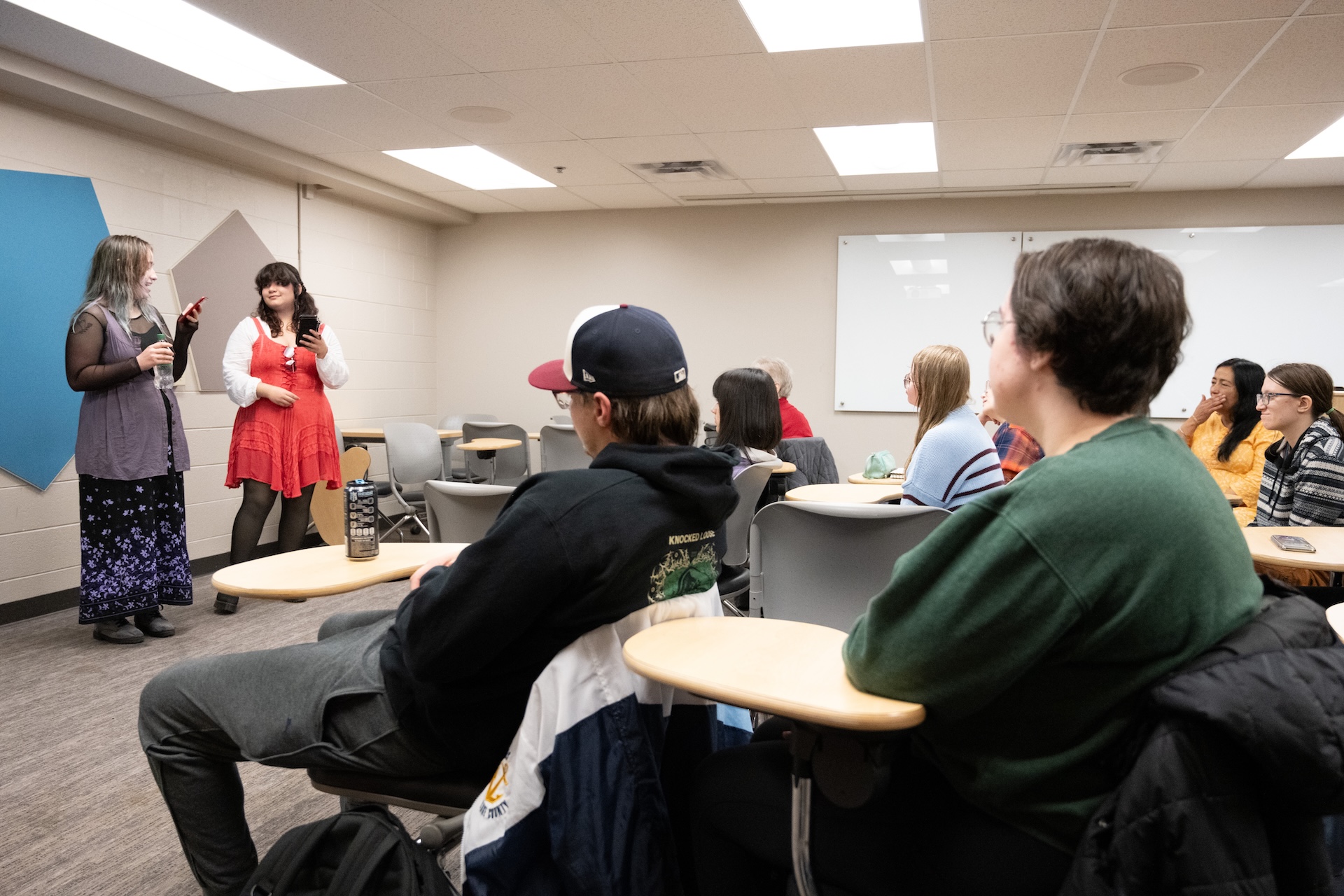
Our recently re-imagined curriculum features brand-new classes—including E 150 English Studies Symposium, a collaborative and co-taught introduction to our disciplines.
Each fall, our instructors develop a new theme to act as a lens through which we study the connections between literature, language, philosophy, education, and culture. Recent themes have included world-building, creation stories, and monster narratives.
Ultimately, this course inspires imaginative thinking and practical application. By the end of the first semester, you’ll not only grasp how inherently interdisciplinary and collaborative the study of English is, but you’ll also gain the theories and tools to meaningfully consider questions about language, text, and practice.
Core English Courses
As you continue your studies and take discipline-specific courses that teach you the ways our different concentrations think, make, and ask questions, you’ll design your own path through the English major by choosing from a number of core courses to build a personal foundation:
The Capstone Experience
The Capstone Experience is the culminating journey for English majors—a chance to bring together everything you’ve learned and take it even further. In this course, you’ll focus on a topic that excites you, whether that’s exploring intersections across our disciplines, or diving deep into a favorite author, era, or movement. Want to blend fantasy fiction with linguistic structure? Or investigate how media and literature shape individual and collective memory? You can do that here.
With a strong emphasis on critical thinking, cultural insight, advanced research, and impactful writing, the Capstone challenges you to think boldly and extend your knowledge beyond the classroom while turning toward the world.
Why I Chose English
Anaïs Markwood credits her love of writing and her family’s advice for helping her decide to study English.
“My dad really encouraged me. He said, ‘Good writers are always going to be needed. With an English major, you can do anything.’ Eventually, I decided to follow my heart and choose English. This choice was affirmed on my first day of college, when I went to all my English classes and felt absolutely at home there.
Getting to do what I loved every day for four years made me so excited for college. My decision to be an English major has been reaffirmed every day since...I now know that there are many more job options than being a teacher, and I’m interested in pursuing careers like editing, publishing, or technical writing in the future. Even if I don’t end up in any of those fields, I know that my writing skills will help me in any job I have.”
Named a College of Liberal Arts Outstanding Grad, Anaïs (she/her) earned a B.A. in English with a double concentration in Writing, Rhetoric, & Literacy and Creative Writing. She also minored in Interdisciplinary Arabic Studies and co-founded the Arabic Culture and Language Club on campus.

Minors allow students to focus on an area that complements their major, enhances their knowledge and skills, or allows them to pursue a particular interest. The Department of English offers three minors: English, Creative Writing, and an Interdisciplinary Minor in Linguistics & Culture. View a complete list of minors available at CSU.
English
The minor in English offers opportunities for students to create a unique path through English and Composition classes.
This freedom allows students to pursue what they love most in language, literature, composition, and writing. Students will gain a set of skills, critical and creative both, that will complement their major and future career.
This minor is now available online and on campus.
Creative Writing
This seven-course sequence combines small, discussion-based writing workshops with classes in composition or literature. The Creative Writing minor is open to majors in all disciplines except English and offers a unique opportunity to balance work in the sciences, business, engineering, or the humanities with the imaginative freedom and cultural engagement of an education in the arts.
Students will gain experience in two genres (poetry, fiction, and/or creative nonfiction) as they study with published authors, interact with visiting writers, and gain familiarity with today’s literary landscape.
Linguistics & Culture
The Linguistics and Culture Interdisciplinary Minor is designed for students with a particular interest in language and its cultural interfaces. Its core is a pair of linguistics and anthropological linguistics courses, which are supported by courses in specific languages, and supplemented by elective courses in English; Anthropology; Languages, Literatures, and Cultures; Philosophy; and Communication Studies.
Composition
The University Composition Program is a vital part of the English Department at Colorado State University. We offer more than 250 sections of writing courses to about 6000 students each year, as well as serving between 2500 and 3000 students a year in our Writing Center.
In addition to offering lower and upper division courses that fulfill the All-University Core Curriculum (AUCC) requirements, the English Department also offers an undergraduate concentration in Writing, Rhetoric, and Literacy and an MA focused on Writing, Rhetoric, and Social Change.
On the composition website you can find out about the University Composition Program including faculty, courses, and composition placement as well as access contact information and related resources.
gtPathways
gtPathways offers resources that address how and why writing can be effective catalysts for learning in any discipline.
Faculty, instructors, graduate teaching assistants, and anyone else involved in this initiative will find useful resources on this site related to assigning writing, grading and responding to student writing, the importance of critical thinking, the challenges associated with integrating writing into a course, and much more.
 "In an era when people are increasingly pressured to see things as only one way or the other, the Department of English—and its amazing faculty—helped me build the tools required to revel in complexity and consciousness."
~Mae Ferry, BA English: Creative Writing

“The Humanities are crucial in teaching empathy and understanding. They both force and allow you to explore different points of view and challenge your own beliefs.”
~Ashley Alfirevic, BA English: Literature

“It is a phenomenal program in which you can really find support for your passion, your voice, and your contribution to the world.”
~Jessica Patterson, BA English and MA English: Communication Development
Declaring an English Major
To declare an English major, make an appointment with one of our English Academic Success Coordinators by calling 970.491.3117.