Students in the College of Liberal Arts attend classes both indoors and outdoors when possible at Colorado State University, October 2, 2025
Bachelor of Arts in English
The B.A. in English at CSU provides a flexible framework for exploring how language, literature, and storytelling shape human experience.
Through diverse coursework spanning writing intensive workshops and in-depth studies of individual authors to classes focused on applied language learning and teacher preparation, you’ll engage both analytical and creative modes of thinking.
Highly adaptable, our program allows you to personalize your path to fit specific interests, while developing your ability to read insightfully, write effectively, and think critically about the world. Upon graduation, you’ll emerge with a versatile foundation for pursuing a wide range of academic and professional pathways and be filled with ideas about how to lead a meaningful life.
Concentrations
We offer six distinct concentrations, allowing you to shape your academic path around what inspires you and matches your future goals.
Creative Writing
Write fiction, poetry, and creative nonfiction while developing a firm knowledge of literary techniques, forms, and genre-specific conventions.
English Education
Learn how to help middle and high school students deepen their abilities as readers, writers, and thinkers through inclusive English language arts teaching practices.
Integrated English Studies
Delve into multiple fields within English Studies and design a major tailored to exploring personal interests and unique connections across our program’s five disciplines.
Linguistics
Study the science of language acquisition and structure, and learn how language reflects identity, culture, and society.
Literature
Interpret poetry, fiction, drama, and popular culture, while focusing on literary theory and enhancing your research and writing skills.
Writing, Rhetoric, and Literacy
Strengthen your understanding of how writing, rhetoric, literacy, identity, and power intersect while practicing writing for public, digital, community, nonprofit, and professional contexts.
Degree requirements
A New Vision
Our re-imagined curriculum features brand-new classes and flexible options to fulfill major requirements. From an exploratory symposium to the concluding capstone experience, you’ll be able to cultivate your curiosities and innovate in new directions.
English Studies Symposium
The English Studies Symposium is a collaborative and co-taught introduction to our disciplines. Each fall, our instructors develop a new theme to act as a lens through which we study the connections between literature, language, philosophy, education, and culture. Recent themes have included world-building, creation stories, and monster narratives.
Ultimately, this course inspires imaginative thinking and practical application. By the end of the first semester, you’ll not only grasp how inherently interdisciplinary and collaborative the study of English is, but you’ll also gain the theories and tools to meaningfully consider questions about language, text, and practice.
Core English Classes
As you continue your studies and take discipline-specific courses that teach you the ways our different concentrations think, make, and ask questions, you’ll design your own path through the English major by choosing from a number of core courses to build a personal foundation, including:
Cross-Concentration Classes
E 200 Inquiry-Based Teaching and Communicating
E 202 Language Use in Society
E 204 Creative Writing as Transformative Practice
E 206 Language for Activist Rhetoric & Writing
E 237 Introduction to Science Fiction
Introductory Literature Classes
E 236 Short Fiction
E 238 Contemporary Global Fiction
E 240 Intro to Poetry
E 242 Reading Shakespeare
E 245 World Drama
E 270 Intro to American Lit
E 276 British Literature – Medieval to 1800
E 277 British Literature – After 1800
Methods Classes
E 301 Framing Texts & Critical Theory in Equity
E 305 Principles of Writing & Rhetoric
E 310 Researching and Writing Literary Criticism
E 320 Intro to the Study of Language
E 341 Literary Criticism and Theory
Capstone Experience
The Capstone is the culminating journey for English majors—a chance to bring together everything you’ve learned and take it even further. In this course, you’ll focus on a topic that excites you, whether that’s exploring intersections across our disciplines, or diving deep into a favorite author, era, or movement. Want to blend fantasy fiction with linguistic structure? Or investigate how media and literature shape individual and collective memory? You can do that here.
With a strong emphasis on critical thinking, cultural insight, advanced research, and impactful writing, the Capstone challenges you to think boldly and extend your knowledge beyond the classroom while turning toward the world.
Through internships, English undergraduates gain professional experience, foster connections in their desired field, and build relationships with mentors. Explore department-specific opportunities in publishing, community literacy, teaching, and more.
As interns at the Community Literacy Center (CLC), English majors Bella Chiango and Alex Holmes worked to create space for diverse stories and to practice active listening in support of community action and social change. In their presentation, “Write Here: Collaborative Community Literacy” at CURC (Celebrate Undergraduate Research and Creativity), they highlighted how they create opportunities for people to write individually and collaboratively while strengthening reading, writing, and critical thinking skills.
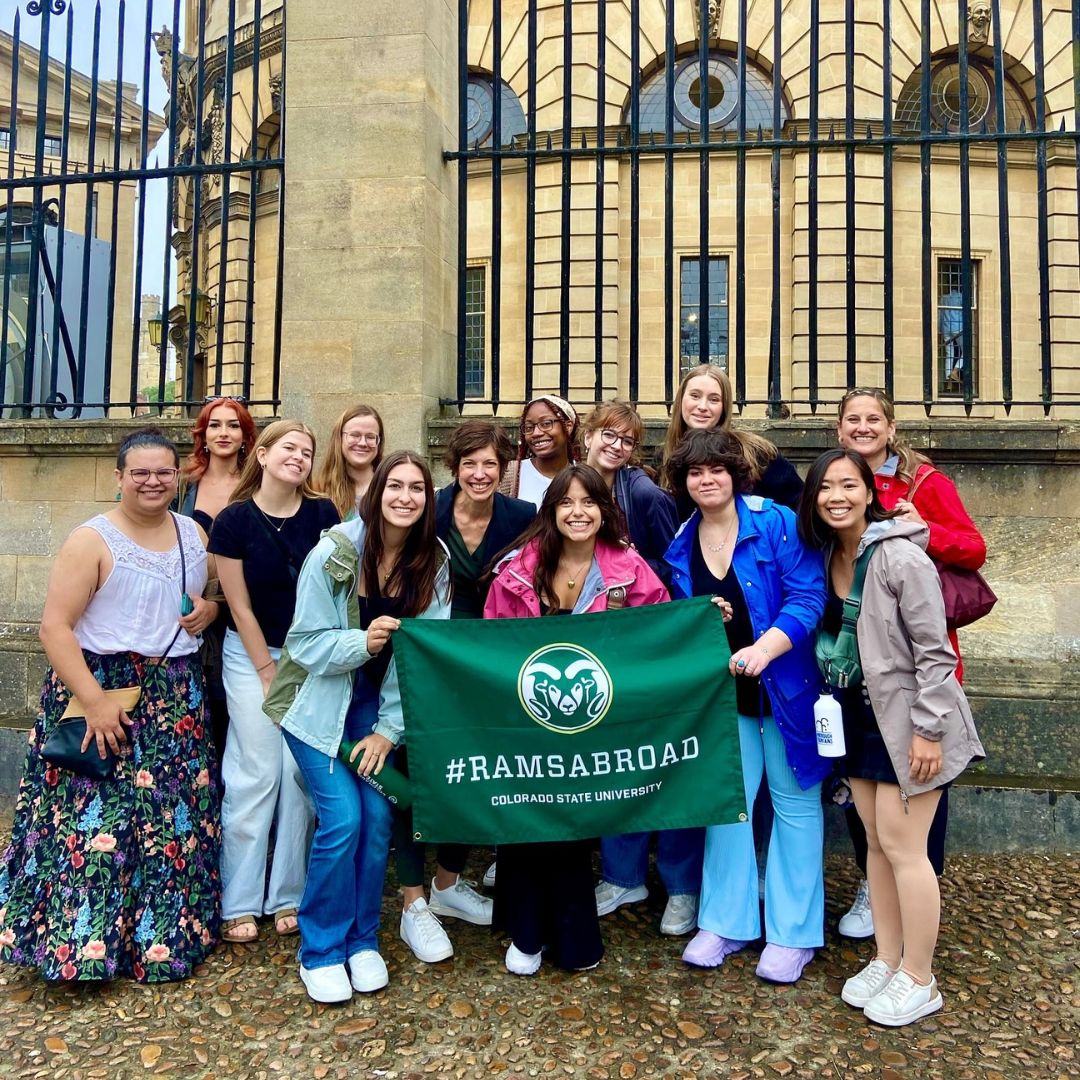
The Department of English offers four faculty‑led summer programs that explore topics tied closely to place and give students the chance to spend time in historic literary hubs that have inspired authors across centuries. Hint: Consider William Shakespeare’s birthplace and where James Baldwin wrote Giovanni’s Room!
We’re home to two student-run organizations that promote community building: Inklings (an English social club) and Dead Poets Society (a poetry workshop and reading club). Many English majors also join Rocky Mountain Student Media and gain experience collaborating on award-winning student media platforms. You can also deepen your engagement with English by joining Sigma Tau Delta, the international English honor society.
“Through my time studying English at CSU, I learned the power of communication to bridge divides and amplify voices that have been silenced. Understanding others is not just a skill, but an act of empathy and resistance. I hope to bring this mindset to my future endeavors, advocating for equity and creating spaces for acceptance.”
Max Pohl, ’25
“I think probably the most important skill I learned at CSU is to think critically and to view the world through an open lens. To be curious and willing to engage further, to dig deeper, to really learn why something is the way that something is. There are different cultures, different countries, different ways of living that influence these stories that we study, and that creates a world that is vast and imaginative.”