Courses & Advising
Experience and Engage
CSU English Department Courses
English department courses are opportunities for you to explore the ways in which we employ the language to meet demands of the twenty-first century. A vibrant and diverse group of teacher educators, linguists, literary scholars, novelists, composition specialists, and writers of creative nonfiction makes up your faculty.
Scroll down for descriptions of Summer 2026 and Fall 2026 course offerings (class time and instructor subject to change) and access important links to help you begin mapping out your English education today.

Course Registration, Availability, and the University Course Catalog
The course descriptions on this web page aim to provide a sense of our disciplinary scope. To search for course availability or register for courses, students with access can login to RAMweb. Incoming or prospective students can visit CSU's online course catalog to browse a general listing of English department courses.
Summer 2026 Courses
To view complete course information for all summer offerings, visit the CSU Summer Session website.
To learn more about the Environmental Humanities program at CSU's Mountain Campus, visit the Environmental Humanities website.
American Studies, Composition, and English Courses
AMST 101 Self/Community in American Culture Since 1877 | 3 credits | Online | May 18 - June 14, 2026 | Grant Bain
America has always been weird, and in this course we’ll learn just HOW weird! This particular section will explore a series of supposed vampire attacks (you read that right: VAMPIRE ATTACKS) in the 19th century in terms of history, psychology, sociology, journalism, medicine, folklore and other disciplines. Examining these strange topics will highlight the role that stories play in our lives and how the various lenses we use to view the world shape reality as we understand it. By completing this course, you will have a greater understanding of what (and just how weird) America is and what your role is in relation to it.
CO130 Academic Writing | 3 credits | 9:00 - 10:15 AM | MTWR | June 15 - August 9, 2026 | Annie Halseth
In CO130: Academic Writing, you will develop and practice how to read and write for academic audiences. In order to effectively communicate in academic contexts, you will learn how to identify rhetorical situations, learn how to identify and revise purposes for writing, practice writing in a variety of genres, and read and research various topics and texts. Since the process of reading and writing is just as important as the final written product, you will practice drafting, outlining, writing, revising, summarizing, analyzing, close reading, and research. These are skills that you will use throughout your time at CSU as well as in the workplace. CO130 will support your learning and work with other classes, audiences, and writing situations.
CO150 College Composition | 3 credits | Multiple Meeting Times | Multiple Instructors
In CO150: College Composition, you will be introduced to many of the key writing, reading, research, and communicating practices you need for success as a university student, professional, and citizen. In this course, you will learn to critically read and respond to a variety of texts, to write for a variety of rhetorical situations and audiences, to dialogue about different experiences and perspectives, and to develop and apply effective writing practices. You will have opportunities to practice the drafting, revising, peer editing, and polishing stages of writing and will produce several polished academic texts as well as lots of informal written reflections in this course.
Must have taken CO 130 or Composition Challenge Essay (score of 3, 4, or 5) or SAT Verbal/Critical reading score of minimum 570 or SAT Evidence Based Reading/Writing score of minimum 620 or ACT COMPOSITE score of minimum 26 or Directed Self-Placement Survey code of 15.
Sections may be offered online.
CO300 Writing Arguments | 3 credits | Multiple Meeting Times | Multiple Instructors
In CO300: Writing Arguments, you will expand your argumentative skills in your specific academic, professional, public, and personal contexts. We use contemporary rhetorical theory to develop sophisticated understandings of effective communication as we write various persuasive texts. We explore the nuances of the rhetorical situation, audience analysis, and Rogerian argument. To help prepare you to write in increasingly digital environments, we may also practice visual, aural, and multimodal arguments. In order to practice advanced reading, note-taking, researching, writing, and revising arguments, you will write to annotate, reflect, inquire, respond, inform, and persuade. You will write as scholars, aspiring professionals, citizens, and consumers/co-creators of culture. CO300 is a writing- and reading-intensive course, and you can expect to have lots of opportunities to read critically, engage in conversations about writing, and produce arguments for a variety of audiences over the course of the semester.
Prerequisite: CO 150 or HONR 193. Sections may be offered online.
CO301B Writing in the Disciplines: Sciences | 3 credits | Online | Multiple Instructors
In CO301B: Writing in the Disciplines--Sciences, you will write about complex scientific topics for diverse audiences, especially non-specialists. Audiences beyond scientific disciplines are often interested in scientific research for a variety of reasons, from entertainment to seeking information to inform making decisions in their daily lives. In CO301B you will write about science (including medicine and technology) for publications such as The New York Times and Scientific American, with particular attention to making choices about focus, structure, detail, and word choice with respect to what non-specialist audiences know and don’t know, want to know and need to know. In addition to learning practical strategies, you will think critically and strategically about how we consume science writing and their goals and purposes as science writers. You will also learn about rhetorical approaches to the function and structure of science writing, reading and analyzing articles from rhetoric and from the scholarship of science communication alongside many real-world examples.
Prerequisite: CO 150 or HONR 193. Sections may be offered online.
E210 Beginning Creative Writing | 3 credits | Online | June 15 - August 9, 2026 | Joanna Doxey
In this course, you will be introduced to the basic techniques of writing fiction and poetry, including writer workshops. May also include some elements of drama and/or creative nonfiction.
E232 Introduction to Humanities | 3 credits | Online | June 15 - August 9, 2026 | Tom Conway
This course promotes a critical consciousness of Western intellectual thought through a survey of literature that has both articulated (e.g. Homer, Plato, Dante) and challenged (e.g. Marx, Nietzsche) some of the West’s most influential worldviews.
E238 Contemporary Global Fiction | 3 credits | Online | May 18- June 14, 2026 | Elizabeth Steinway
E238 features contemporary fiction chosen for its relevance to global and cultural awareness. In other words, this course will explore the wide range of ways humans experience their position as an individual in relation to a broader societal context shaped by various outside forces, including family, community, religion, history, politics, art, technology, economics, and more. These works will allow the students to understand both fundamental human similarities shared by superficially different peoples in the 20th and early 21st centuries, but also to examine the fundamental differences in attitudes, issues, and concerns between peoples of widely varying cultures.
E238 introduces the basic formal elements of fiction (plot, characterization, point of view, narrative structure, setting, description, dialogue, conflict, symbolism, etc.) with coursework including close readings, in-depth discussions, and exploratory writing assignments designed to assist you in developing your own interpretations of these texts.
E311A Intermediate Creative Writing: Fiction | 3 credits | Online | June 15 - August 9, 2026 | Mika Todd
Group discussion of student writing, literary models, and theory; emphasis on developing individual style.
E311B Intermediate Creative Writing: Poetry | 3 credits | Online | June 15 - August 9, 2026 | slp (sarah louise) pieplow
This course is an online poetry workshop constructed to mix the best of in-person and online learning for an intimate and fruitful workshop experience. We will read new forms and new poets from a variety of styles, backgrounds, and identities; each module we will look at a different technique, poetic term, form, or concept, with writing prompts that get us generating new work in new ways. Our goal is to become thoughtful readers and to build a base of poetic knowledge and vocabulary while pushing ourselves to look beyond, and under—to understand what the poetic process is, and means, for us, as writers, in community.
E311C Intermediate Creative Writing: Nonfiction – Travel Writing | 3 credits | Online | May 18 - June 14, 2026 | Tobi Jacobi
E320 – Introduction to the Study of Language | 3 credits | Online | June 15 - August 9, 2026 | Luciana Marques
E320 introduces the basic concepts and theories that linguists/applied linguists adopt in trying to understand how language works and how language is used. Language is studied from a structural perspective, with emphasis on morphology, phonetics and phonology, syntax, semantics, and pragmatics. Additional topics of interest include language variation and language change. This course is recommended for, but not limited to, students interested in language description and its applications, such as TESOL (Teaching English to Speakers of Other Languages), language documentation, computational linguistics, foreign language teaching, and teaching in linguistically and culturally diverse classrooms.
This is a required core course in the Linguistics and Culture Interdisciplinary Minor and strongly advised for students with the Linguistics concentration.
E332 - Modern Women Writers | 3 credits | Online | May 18 - June 14, 2026 | Aparna Gollapudi
This is an online course that brings together twentieth- and twenty-first- century women writers from all over the world working in various literary forms. A poet from Russia, novelists from India and Zimbabwe, Asian American playwrights, a graphic novelist: these are some of the figures you will meet in this course. We will consider their works from a range of historical and theoretical perspectives. This is a very fast-paced course, so please be prepared for that. Course materials include recorded lectures. Activities and assignments include quizzes, exams, essay-writing, virtual presentations, reading responses, discussion posts, etc.
This course fulfills a Category 2 or 3 elective requirement for English majors.
E370 - American Literature in Cultural Contexts | 3 credits | Online | June 15 - July 12, 2026 | Catherine Ratliff
American literature in social, political, economic, aesthetic, intellectual, and multimedia contexts.
Fall 2026 Courses
Click on course titles to expand their respective descriptions, and to help plan your immersion in the interdisciplinary study of English. Class times/instructors are subject to change.
American Studies, Composition, and Education Courses
AMST100 Self/Community in American Culture, 1600-1877 | 3 credits | 2:00 - 3:15 PM | TR | Tom Conway
Critical analysis of the meaning and development of American culture, 1600-1877, through themes of self and community in art, politics, society, and religion.
AMST101 Self/Community in American Culture Since 1877 | 3 credits | Multiple Meeting Times | Multiple Instructors
Critical analysis of the meaning and development of American culture since 1877, through themes of self and community in art, politics, society, and religion.
CO130 Academic Writing | 3 credits | Multiple Meeting Times | Multiple Instructors
In CO130: Academic Writing, you will develop and practice how to read and write for academic audiences. In order to effectively communicate in academic contexts, you will learn how to identify rhetorical situations, learn how to identify and revise purposes for writing, practice writing in a variety of genres, and read and research various topics and texts. Since the process of reading and writing is just as important as the final written product, you will practice drafting, outlining, writing, revising, summarizing, analyzing, close reading, and research. These are skills that you will use throughout your time at CSU as well as in the workplace. CO130 will support your learning and work with other classes, audiences, and writing situations.
CO150 College Composition | 3 credits | Multiple Meeting Times | Multiple Instructors
In CO150: College Composition, you will be introduced to many of the key writing, reading, research, and communicating practices you need for success as a university student, professional, and citizen. In this course, you will learn to critically read and respond to a variety of texts, to write for a variety of rhetorical situations and audiences, to dialogue about different experiences and perspectives, and to develop and apply effective writing practices. You will have opportunities to practice the drafting, revising, peer editing, and polishing stages of writing and will produce several polished academic texts as well as lots of informal written reflections in this course.
Must have taken CO 130 or Composition Challenge Essay (score of 3, 4, or 5) or SAT Verbal/Critical reading score of minimum 570 or SAT Evidence Based Reading/Writing score of minimum 620 or ACT COMPOSITE score of minimum 26 or Directed Self-Placement Survey code of 15.
Sections may be offered online.
CO300 Writing Arguments | 3 credits | Multiple Meeting Times | Multiple Instructors
In CO300: Writing Arguments, you will expand your argumentative skills in your specific academic, professional, public, and personal contexts. We use contemporary rhetorical theory to develop sophisticated understandings of effective communication as we write various persuasive texts. We explore the nuances of the rhetorical situation, audience analysis, and Rogerian argument. To help prepare you to write in increasingly digital environments, we may also practice visual, aural, and multimodal arguments. In order to practice advanced reading, note-taking, researching, writing, and revising arguments, you will write to annotate, reflect, inquire, respond, inform, and persuade. You will write as scholars, aspiring professionals, citizens, and consumers/co-creators of culture. CO300 is a writing- and reading-intensive course, and you can expect to have lots of opportunities to read critically, engage in conversations about writing, and produce arguments for a variety of audiences over the course of the semester.
Prerequisite: CO 150 or HONR 193. Sections may be offered online.
CO301A Writing in the Disciplines: Arts and Humanities | 3 credits | Multiple Meeting Times | Multiple Instructors
In CO301A: Writing in the Disciplines--Arts and Humanities, you will focus (primarily) on writing for a range of public audiences interested in issues and content of the arts and humanities. Thus, the specialized discourse emphasized in this course is characterized by strategies that frame for, and appeal to readers outside academe (focused narrative, description, definition and elaboration of key critical terms, illustration as well as critical analysis, evaluation, and argument). CO301A provides you with multiple opportunities to extend your writing skills. In particular, you will begin the course analyzing selected texts in terms of rhetorical context, framing, target audiences, kinds and arrangements of evidence, uses of source material, genre conventions, stylistic options, format, etc. You will extend your rhetorical knowledge by practicing oral and written analysis and critique of issues important to audiences within the arts and humanities. In addition to a focus on deepening your understanding of composition as rhetorical practice and ability to produce effective discourse about/in the humanities for varied public contexts, you will have opportunities to transform content knowledge about the arts and humanities into discourse that educates, enlightens, provokes, influences, and connects with audiences beyond the classroom. You will also have opportunities to explore stylistic elements such as the virtues of the writing (clarity, correctness, appropriateness, and distinction), diction, figures of speech, schemes, rhythm, or types of styles as we produce writing for specific audiences.
Prerequisite: CO 150 or HONR 193. Sections may be offered online.
CO301B Writing in the Disciplines: Sciences | 3 credits | Multiple Meeting Times | Multiple Instructors
In CO301B: Writing in the Disciplines--Sciences, you will write about complex scientific topics for diverse audiences, especially non-specialists. Audiences beyond scientific disciplines are often interested in scientific research for a variety of reasons, from entertainment to seeking information to inform making decisions in their daily lives. In CO301B you will write about science (including medicine and technology) for publications such as The New York Times and Scientific American, with particular attention to making choices about focus, structure, detail, and word choice with respect to what non-specialist audiences know and don’t know, want to know and need to know. In addition to learning practical strategies, you will think critically and strategically about how we consume science writing and their goals and purposes as science writers. You will also learn about rhetorical approaches to the function and structure of science writing, reading and analyzing articles from rhetoric and from the scholarship of science communication alongside many real-world examples.
Prerequisite: CO 150 or HONR 193. Sections may be offered online.
CO301C Writing in the Disciplines: Social Sciences | 3 credits | Multiple Meeting Times | Multiple Instructors
In CO301C: Writing in the Disciplines--Social Sciences, you will focus on 1) developing a nuanced rhetorical understanding of disciplinary writing within various fields of the social sciences, 2) studying contexts for professional and non-expert social science writing, and 3) practicing similar kinds of writing for non-academic audiences and purposes. This course offers you multiple opportunities to both read and analyze varieties of social science writing and to research, write, and revise their own compositions on social science topics relevant to their majors and their emerging areas of expertise. You will have opportunities to develop an advanced understanding of rhetorical analysis, non-agonistic argumentation, and other rhetorical and writing strategies. In CO301C you will be introduced to and practice writing a series of texts that represent the ways that social sciences writing circulates within popular, workplace, and/or academic contexts.
Prerequisite: CO 150 or HONR 193. Sections may be offered online.
CO301D Writing in the Disciplines: Education | 3 credits | 3:00 - 3:50 PM | MWF | Cindy O'Donnell-Allen
Teachers write to know, and they write to learn. This course is designed to support future teachers to advance your own thoughts and to advance educational change. Students will read and explore current issues in education and consider examples of professional writing both in print and in multimodal form. Students will write to refine existing theories of education, examine personal teaching philosophy, and engage in professional conversations in the field.
CO302 Writing in Digital Environments | 3 credits | Multiple Meeting Times | Multiple Instructors
In CO302: Writing in Digital Environments, you will expand your skills in writing in digital environments relevant to your specific academic, professional, public, and personal contexts. Over the semester, you will create content for a chosen discourse community while also developing techniques for peer-review, collaboration, and revision in media-rich digital contexts.
Prerequisite: CO 150 or HONR 193.
EDUC 463 – Methods in Teaching Language Arts | 3 credits | 10:00 - 11:40 AM | MW | Naitnaphit Limlamai
This course is designed to prepare middle and high school teachers to teach reading, writing, speaking, and listening in English/Language Arts classrooms. Our work will be centered in anti-racist and anti-oppressive pedagogies and will focus on the processes, principles, and practices of supporting learners. Upon completion of this course, students will be better able to ground their instruction in the standards, plan lessons and units, consider means for assessing learning, implement sound practices in their classrooms, and enter into professional conversations about the teaching of English. The course is designed in an experiential way in order for pre-service teachers to learn and practice skills and strategies to better understand their validity and usefulness in the classroom.
Undergraduate English Courses
E140 The Study of Literature | 3 credits | 11:00 - 11:50 AM | MWF | Ed Lessor
Basic principles of reading literary texts.
This course fulfills Category 3B: Arts & Humanities for the AUCC requirements.
E142 Reading Without Borders | 3 credits | Multiple Meeting Times | Multiple Instructors
Authors from a range of international, cross-national, cultural, and ethnic backgrounds focusing on themes of immigration, exile, or education.
E150 English Studies Symposium | 3 credits | 3:00 - 3:50 PM | MWF | Ted Fabiano and Grant Bain
This experimental course is designed to ignite your curiosity and creativity and encourage you to think across our five disciplines within the English major.
Each fall, our instructors develop a new theme to act as a lens through which we will study the connections between literature, language, philosophy, education, and culture. Recent themes have included world-building, creation stories, and monster narratives. In this class, students learn alongside their teachers, asking questions and posing solutions together.
Ultimately, this course inspires imaginative thinking and practical application. By the end of the semester, you’ll not only grasp how inherently interdisciplinary and collaborative the study of English is, but you’ll also gain the theories and tools to meaningfully consider questions about language, text, and practice.
E204 Creative Writing as Transformative Practice | 3 credits | 2:00 - 3:15 PM | MW | Sarah Perry
Emphasizes the transformative possibilities of creative writing by exploring its relationship to the social, environmental, intellectual, aesthetic, and personal. Engage and develop the many ways that creative writing methodologies can change both the self and the world.
E210 Beginning Creative Writing | 3 credits | Multiple Meeting Times | Multiple Instructors
In this course, you will be introduced to the basic techniques of writing fiction and poetry, including writer workshops. May also include some elements of drama and/or creative nonfiction.
Sections may be offered online.
E222 Banned Books and Censorship | 3 credits | 9:30 - 10:45 AM | TR | Ricki Ginsberg
This course explores the diversity of voices found in banned and challenged books, analyzing how school censorship, in particular, reflects and reinforces broader societal patterns of interaction related to race, gender, sexuality, and power. Through critical reflection of frequently banned texts, students will consider patterns of historical and contemporary censorship. Students from all majors and levels are invited to enroll.
E232 Introduction to Humanities | 3 credits | 10:00 - 10:30 AM | MWF | Mitch Macrae
What are the humanities?
The humanities can be described as the study of how people express, process, and document the human experience. Since humans have been able, we have used philosophy, literature, religion, art, music, history and language to comprehend and communicate our “being-in-the-world.” These modes of expression have become some of the subjects that traditionally fall under the humanities disciplines for both creation and contemplation. Engaging with these records of human experience give us the opportunity to feel a sense of connection to those who have come before us, while also enhancing our understanding of contemporary forms of expression that are essential to human understanding.
In this course, we will investigate some of the history of the Western expression of human experience with authors who have left a lasting imprint on the Western mind.
This course fulfills Category 3B: Arts & Humanities for the AUCC requirements.
E236 Short Fiction | 3 credits | Multiple Meeting Times | Multiple Instructors
Examines form, technique and interpretation in short fiction.
This course fulfills Category 3B: Arts & Humanities for the AUCC requirements.
E237 Introduction to Science Fiction | 3 credits | Multiple Meeting Times | Multiple Instructors
How do we imagine the future in literary texts? From post-apocalyptic landscapes to the alternative worlds of Indigenous futurism, we will analyze a range of speculative realities offered to us in science fiction. This course explores the history of the science fiction genre and the topics that continually animate it, including utopia/dystopia/heterotopia, artificial intelligence, genetic engineering, and resource wars. We will examine science and speculative fiction through a range of media (novels, films, short stories, manifestoes, etc.) and think critically about the questions it poses concerning science, community, ecology, colonialism, and the future of the human species.
E238 Contemporary Global Fiction | 3 credits | Multiple Sections | Multiple Instructors
Contemporary fiction chosen for its relevance to global and cultural awareness.
Sections may be offered online.
E240 Introduction to Poetry | 3 credits | 2:00 - 3:15 PM | TR | Ryan Campbell
Development of critical skills necessary to understand and enjoy poetry.
E245 World Drama | 3 credits | 12:30 - 1:45 PM | TR | Nina McConigley
World drama in cultural contexts.
E270 Introduction to American Literature | 3 credits | 11:00 AM - 12:15 PM | TR | Catherine Ratliff
History and development of American writings from 16th-century travel narratives through early 20th-century modernism.
This course fulfills Category 3B: Arts & Humanities for the AUCC requirements.
E276 British Literature: Medieval Period to 1800 | 3 credits | 11:00 - 11:50 AM | MWF | William Marvin
British literature from Beowulf through the 18th century in relation to its historical contexts.
This course fulfills Category 3B: Arts & Humanities for the AUCC requirements.
E301 – Framing Texts with Critical Theories and Teaching Equity, Justice, and Activism | 3 credits | 12:30 - 1:45 PM | TR | Rosa Nam
This course explores the ways in which literary critical theories and approaches can be used to frame texts and rethink pedagogy for secondary education. Students will apply lenses for understanding young adult texts and centering equity in education. All majors welcome.
This course satisfies the requirement for AUCC 4A and 4B.
E305 Principles of Writing and Rhetoric | 3 credits | 12:30 - 1:45 PM | TR | Doug Cloud
This course examines how writing and rhetoric work. In other words, it asks questions about the relationship of writing and power, the relationship between discourse and reality, alternatives to traditional notions of rhetoric as the "art of persuasion," and how to enhance your writing skills by understanding the history of rhetorical theories and practices.
This is a required core course in the Writing, Rhetoric, and Literacy concentration. It counts as English elective credit for all others.
E310 – Researching and Writing Literary Criticism | 3 credits | 11:00 AM - 12:15 PM | TR | Mark Bresnan
This class is designed to practice skills in conducting research and writing literary criticism—skills that will facilitate your success in upper-division literature courses. We will also study strategies for translating these skills to research and writing occasions beyond the literature classroom. We’ll read and discuss an array of literary texts from ancient to modern.
Required for Literature concentrators.
E311A Intermediate Creative Writing: Fiction | 3 credits | Multiple Meetings Times | Multiple Instructors
Group discussion of student writing, literary models, and theory; emphasis on developing individual style.
Must register for lecture and recitation. Sections may be offered online.
E311B Intermediate Creative Writing: Poetry | 3 credits | 3:00 - 4:15 PM | MW | Camille Dungy
Group discussion of student writing, literary models, and theory; emphasis on developing individual style.
Must register for lecture and recitation.
E311C Intermediate Creative Writing: Nonfiction | 3 credits | 2:00 - 3:15 PM | TR | Harrison Candelaria Fletcher
Group discussion of student writing, literary models, and theory; emphasis on developing individual style.
Must register for lecture and recitation. Sections may be offered online.
E320 – Introduction to the Study of Language | 3 credits | 11:00 AM - 11:50 AM | MWF | Luciana Marques
This course introduces the basic concepts and theories that linguists/applied linguists adopt in trying to understand how language works and how language is used. Language is studied from a structural perspective, with emphasis on morphology, phonetics and phonology, syntax, semantics and pragmatics. Additional topics of interest include language acquisition, language variation, and language change. This course is recommended for, but not limited to, students interested in language description and its applications, such as TESOL (Teaching English to Speakers of Other Languages), language documentation, computational linguistics, foreign language teaching and teaching in linguistically and culturally diverse classrooms.
E324 – Teaching English as a Second Language | 3 credits | 10:00 AM - 10:50 AM | MWF | Tatiana Nekrasova-Beker
This is a required core course in the Linguistics and Culture Interdisciplinary Minor and strongly advised for students with the Linguistics concentration.
E329 – Pragmatics and Discourse | 3 credits | 11:00 - 11:50 AM | TR | Gerald Delahunty
This course introduces the study of Pragmatics and Discourse Analysis, with examples from English and other languages that students know or are studying. Pragmatics is the study of general principles that communicators invoke when producing and interpreting language in context. Discourse analysis studies the properties of specific types of language use in specific settings, e.g., conversational, advertising, legal, medical, educational, and multi-medial, as well as such topics as politeness, ideology, gender, genre, identity, and culture, all areas of exciting current research and discovery.
E333 – Critical Studies of Popular Texts | 3 credits | 9:30 - 10:45 AM | TR | Harrison Candelaria Fletcher
This course is inspired by controversial writer John D’Agata, who advocates the broadest definition of the essay, which at its French root, essai, means to attempt, to endeavor, to try. According to D’Agata, writers should be free to use any and all methods at their disposal in pursuit of their intellectual, spiritual, cultural or aesthetic goals, including blurring genre, form, fact and imagination. Drawing from The Next American Essay, edited by D’Agata himself, we will discuss what makes an essay and essay as well as how events, memories and landscapes influence approach and content. In addition to active discussion and critical work, we will write our own creative endeavors to experiment with technique and audience.
E337 Western Mythology | 3 credits | 9:00 - 9:50 AM | MWF | William Marvin
The gods who emerged from the timelessness of pre-creation, the cannibal gods and the cosmic gods who with war shaped the order of existence, and the gods who loved sacrifice, ruled in discord, and had ado with mortals in the guises of human-and-animal-kind: These are the personified inscrutables that “western myth” built a coherent core of narration around, and to this narration attached plots and characters in endless variety. Even the story-telling itself, like creation, began in time immemorial. Its main cycles coalesced in spite of migrations and the wrack of civilizations, long even before the advent of writing and literature. But literature, when it came, changed everything. No longer was hieratic myth, the mythology of priests, to be solely the property of cult. This course is about how poets in the age of writing reshaped the potential of the gods. We will track the gods’ wanderings from their cultic origins in magic and hymn to their fluorescence in Sumerian and Greek creation myth, Indic and Germanic dragon slaying, Greek siege epic around the war for Helen of Troy, up to the point of the Roman de-sacralization of the gods in a modern kind of erudite, humane irony. We shall discover furthermore how myth first prompted literary criticism, when readers asked if what Homer said about the immortal gods was true? So, the course will also cover the history of reading myth from classical antiquity to the present, develop this history into a set of critical perspectives, and apply these as hermeneutic tools to the myths as we read them.
This course fulfills a Category 4 elective requirement for English majors and world literature for English Education concentrators. It also counts toward the Religious Studies minor.
E341 Literary Criticism and Theory | 3 credits | 2:00 - 2:50 PM | MWF | Jenny Albright
This course will introduce you to several major schools of contemporary literary theory and provide an overview of the history of theory as an academic field. The primary goal of the course is to make students critically aware of the way that acts of reading, writing, and making art are connected to a range of political, social, cultural, and nonhuman forces at work in the world around us.
E344 - Shakespeare | 3 credits | 12:00 - 12:50 PM | MWF | Barbara Sebek
This course will focus on six plays by Shakespeare, studying them through a global lens. The very name of one of the playhouses in which our plays were staged—The Globe—attests to a lively, topical, and novel form of awareness of the wider world. How does this awareness register in the plays, and how do Shakespeare's plays continue to inform global consciousness today? We will read plays in their historical contexts and consider recent screen productions as creative appropriations that speak to our own moment. Final papers or projects will allow students to tailor their work to their specific concentrations within or beyond the English major.
E375 – Mindfulness Practices and Literacy Tools For Healing a Changing World | 3 credits | 1:00 - 1:50 PM | MWF | Cindy O'Donnell-Allen
This course will immerse students in a centuries-old conversation on mindfulness that is still more relevant than ever, considering the existential challenges we face in today’s world. After critiquing contemporary renditions of mindfulness, students will explore diverse texts that center “engaged mindfulness,” which is rooted in compassion for self and others; geared toward justice, community, and intentional social action; and supported by neuroscientific research. Students will actually apply the principles and literacy practices of engaged mindfulness through hands-on, choice-based projects that are geared toward their interests and programmatic tastes. All majors welcome.
E384 Supervised College Teaching: Classroom | 1 to 3 credits | Multiple Meeting Times | Multiple Instructors
Supervised assistance in instruction.
Written consent of department chair. A maximum of 10 combined credits for all 384 and 484 courses are counted towards graduation requirements.
E401 Teaching Reading | 3 credits | 3:30 - 4:45 PM | TR | Rosa Nam
Teaching Reading is designed to introduce students to current theory, research, and instructional strategies founded on a critical literacy approach that amplifies a human-first approach for growing readers in secondary grades, within and beyond the classroom.
E403 – Writing the Environment | 3 credits | 3:30 - 4:45 PM | TR | Matthew Cooperman
In this course we will explore our various ideas about the Environment, and try to write as accurately and fully about it as possible. But what is the Environment? Is it the same thing as Nature? Is it near or far? How to make contact? What things and creatures do we encounter there? And what—or who—do we remember? What is an ecosystem and how does it function? And what is a shared environment? And where do you live? Right now, no doubt on a street in a town in the west of a teetering country. Can you write about that? Is that "writing the environment?" These questions will drive our inquire into the local and global environments in which we live. We will consider what the human animal is, and how it interacts with the more-than-human world. Through all this we will learn to write about the environment with understanding, nuance, and compassion, and try and connect our experiences with the larger world.
E405 Young Adult Literature | 3 credits | 2:00 - 3:15 PM | TR | Ricki Ginsberg
E405 is designed to give future teachers, writers, and literature students a survey of mostly contemporary novels for young adults. During this course we'll read and discuss approximately a book a week, with a focus on applying a critical literacy lens to explore texts that engage adolescents. All majors welcome.
E407 – Genre Bending | 3 credits | 10:00 - 10:50 AM | MWF | Barbara Sebek
In this course, we will examine how genre shapes our understanding of literature. We’ll learn that genre functions as a means to categorize texts, trace literary genealogies, and establish audience expectations and explore how genres are subject to hybridization, manipulation, and contingency. With a focus on genre as both a fixed system and open‑ended process, we’ll increase our understanding of how writers and readers create, evaluate, and enjoy literary texts and other media.
E412A Creative Writing Workshop: Fiction | 3 credits | 2:00 - 3:15 PM | TR | Andrew Altschul
A workshop that delves into the techniques of fiction, paying particular attention to the ways in which “rules” and “conventions” are followed, re-interpreted, or subverted by different writers. We will examine a range of published fiction and write a number of shorter pieces before turning to longer student stories in the last third of the semester. For students who have previously passed E311A with a grade of B or higher.
Must register for lecture and recitation. Maximum of 6 credits allowed in course.
E412B Creative Writing Workshop: Poetry | 3 credits | Online - Asynchronous | Cass Eddington
E414 – Grant and Proposal Writing | 3 credits | 9:30 - 10:45 AM | MWF | Erika Szymanski
Course description coming soon.
E456 – Topics in Critical Theory: Literature and Philosophy of the Non-Human | 3 credits | 11:00 - 11:50 AM | MWF | Lynn Badia
Experiments in narrative form have created new ways of seeing and thinking from non-human perspectives. This course examines the theoretical and narrative project of understanding non-human agencies, and, as Donna Haraway has described, “multispecies becoming-with.” In the process of taking on the perspective of the animal, plant, and mineral, the texts examined in this course necessarily reconsider what it means to be human. We will be reading post-humanist theory alongside a range of literary authors such as John Joseph Mathews, Ursula K. Le Guin, Leslie Marmon Silko, Franz Kafka, and J. M. Coetzee.
E458 – Topics in Language, Law, and Justice | 3 credits | 9:00 - 9:50 AM | MWF | Jesse McLain
Societies are governed by laws and, ideally, justice is determined according to law. Laws are crafted in language, and, ideally, people should be able to read the laws they are subject to. However, the language of English law is very different from other uses of English. Few of us are skilled in reading legal texts because of the strangeness of their language. And we are only superficially knowledgeable about the laws that are most immediately relevant to us, e.g., those governing reasonable search and seizure, Miranda rights, and freedom of speech. We will investigate these and many other issues by studying the language in which laws are written, how laws govern language use and interpretation, and how legal actors have interpreted and manipulated those laws.
We will examine an instance where law and justice have not aligned for linguistic reasons and examine the ideologies of language that affected the jury's decision in that case, as well as media reactions to the speech of the most important prosecution witness. We will also examine cases in which expert testimony by linguists has prevented injustice and cases where such testimony has led to the release of people unjustly convicted. Linguists' study of language in legal settings has a substantial research history which is growing in influence in legal settings. This course will explore the intersections of these two important disciplines and pay particular attention to how laws about language, and the beliefs they are based on, affect access to justice by all, but especially by linguistically diverse populations.
This course can count as an upper division Supporting Course for the Linguistics and Culture Interdisciplinary Minor and the Legal Studies Interdisciplinary Minor.
E465 – Experimental Correspondences: Photography, Painting, and Writing from U.S. Modernism to the Native American Renaissance (Capstone) | 3 credits | 1:00 - 1:50 PM | MWF | Bryce O'Tierney
We will encounter U.S. Modernism through photography, painting, poetry and prose, along a historical continuum to present day photo-poetics, with a particular emphasis on women creators and the West. Within Modernism we will examine the particular craft and cultural stances of the Arts & Crafts Movement, Abstraction, the Harlem Renaissance, and the Native American Renaissance, through close inquiry and analysis of the work of: Anne Brigman, Georgia O’Keeffe, Jean Toomer, Joy Harjo, and Leslie Marmon Silko. We will examine how these artists wrote about, and alongside- or otherwise documented- their primary artistic mediums, and consider the impacts of correspondences both personal and contextual to stimulate and complicate craft, form, and content.
E478 – Modern Poetry | 3 credits | 12:30 - 1:45 PM | TR | Matthew Cooperman
What is Modern Poetry—and what do we even mean by “Modern”? When does it begin, what defines it, and how does it collide with both Modernism and the Contemporary? These questions resist fixed answers, which is exactly what makes this period so exciting to study.
In this course, we’ll explore the major transformations in poetry from the mid‑19th century through the end of World War II—when writers like Whitman, Dickinson, Baudelaire, and Rimbaud were reshaping form, voice, and vision. This era sees the shift from meter to free verse and a radical reconsideration of art, culture, and history.
Together, we’ll read poems closely, develop strategies for navigating Modern Poetry’s famous complexity, and place these works in their social and political contexts. Our goal is to discover both the challenges and the deep pleasures the Modern offers—because if Modern Poetry still feels alive today, it’s because it continues to speak to the joys and struggles of being human.
E487B.001 Internship: Literary Editing – Greyrock Review | 1 credit | 7:30 - 8:20 PM | M | Stephanie G'Schwind
Students receive credit (one free elective credit per semester for up to four semesters) for an internship with Greyrock Review, CSU's annual, student-run, undergraduate literary magazine.
During this year-long internship, students learn the intricacies of publishing, printing, and promoting a literary journal. As staff interns, students must attend weekly sessions to discuss promoting the call for submissions, reading submissions, copyediting, layout, proofreading, design, and publicity.
Students must be junior or senior English majors or minors with a minimum GPA of 3.0 and should have taken E210 with a grade of B or better. Students must register for both Fall 2026 and Spring 2027—this is a one-year commitment. Interested students should contact Stephanie G’Schwind at Stephanie.GSchwind@ColoState.EDU by March 31.
E487C Internship: Community Literacy Center | 1-3 credits | Tobi Jacobi
The Community Literacy Center looks for juniors, seniors and grad students for full year placements as CLC interns (September to May).
Interested candidates should read the CLC website for insight into our program and for more information about the internship application.
500-Level English Courses
E501 – Theories of Composition | 3 credits | 11:00 AM - 12:15 PM | TR | Lisa Langstraat
Theories of Composition is designed to introduce you to the most influential theories of writing in the field of Rhetoric and Composition and to examine the ways in which the politics of writing and social justice efforts shape those theories. In this section of E501 we will engage a multitude of theoretical approaches—from Current Traditional Rhetorics to Post-Process Composition and beyond. These approaches are by no means static. Sometimes complimentary, sometimes competing, they reflect the identity of a discipline—and its practitioners. To that end, it is my hope that we come to understand these theoretical frameworks in light of what it means to do theory as teacher/scholars of composition and to understand how a variety of compositionists work toward social justice—in and out of the classroom.
E503 – Investigating Classroom Literacies | 3 credits | 5:30 - 8:00 PM | W | Naitnaphit Limlamai
This course prepares those interested in working in classrooms to participate in teacher action research and to (continue to) enter into professional conversations to advance educational change. Students in the course will have the opportunity to engage in their own research interests as they move toward the goals of the course. Students will develop a classroom literacy topic they are interested in exploring and work through a research cycle to investigate that topic: they will conduct a literature review, craft research questions, collect and analyze a manageable amount of data, and produce preliminary findings and discussion sections. Students will hear from a variety of researchers in the field and also explore their own identities and positionalities and how they come into their research interests and processes. The class is open to students in all programs.
E504 – Professional Issues in Composition & Writing | 3 credits | 2:30 - 3:45 PM | MW | Genesea Carter
Examines contemporary professional concerns, debates, and approaches in composition and writing studies.
E506A – Literature Survey: English | 3 credits | 11:00 AM - 12:15 PM | TR | Lynn Shutters
Synthesis of literary attitudes, modes, and genres of an age.
E507 – Special Topics in Linguistics | 3 credits | 1:00 - 2:15 PM | MW | Luciana Marques
Full course description coming soon!
E513A – Form & Technique in Fiction | 3 credits | 4:00 - 6:30 PM | W | Andrew Altschul
Selected readings in and discussions of modern literature and criticism from the writer's point of view with emphasis on form and technique.
E514 - Phonology and Morphology for ESL/EFL | 3 credits | 3:30 - 4:45 PM | TR | Gerald Delahunty
E514 introduces the descriptive study and linguistic analysis of English phonetics/phonology and morphology/word formation, and their connections to second language acquisition and teaching. You will be able to read and make use of linguistic descriptions of English and other languages, as well as appropriately select and present pedagogical material in a variety of teaching circumstances.
E526 – Teaching English as a Foreign/Second Language | 3 credits | 4:00 - 6:30 PM | M | Fabiola Ehlers-Zavala
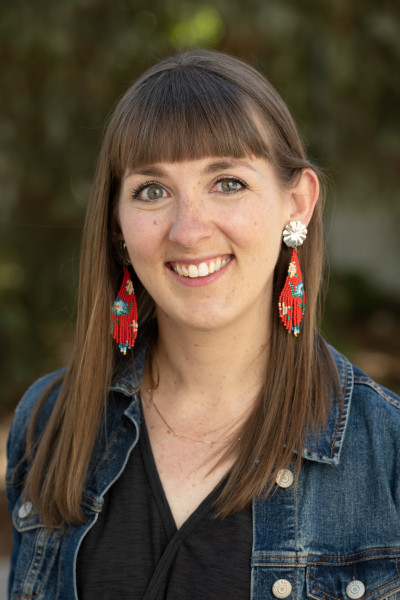
Academic Success Coordinators
provide first-year students and sophomores with their advising code
review check sheets and undergraduate degree plans
Help English students navigate their degree plan
Connect English students with resources across campus that will help them succeed
Academic Success
Coordinators

New 200 Level Courses
Join us for interdisciplinary explorations and deep-dives into Creative Writing, English Education, Linguistics, Literature, and Rhetoric!
How can we develop inquiry in learning spaces, in our own lives, and in community with others? Learn how to use public debate and deliberation to address social issues and global concerns. You’ll have choice in assignments to explore your interests!
This course examines the interaction of language with individuals and larger social communities, as well as with the many cultures represented within those various communities. Students explore how language functions to establish and/or solidify notions of power, ethnicity, gender, in addition to social and cultural identities. As a result of this course, it is our hope that students will develop an appreciation of how language can serve as an object of scientific study and will identify ways to apply what they learn about language to everyday social and cultural interactions in their own lives and communities.
This course emphasizes the transformative possibilities of creative writing by exploring its relationship to the social, environmental, intellectual, aesthetic, and personal. Engage and develop the many ways that creative writing methodologies can change both the self and the world.
We’ve all heard the claim, “The pen is mightier than the sword.” Yet in our contemporary culture, it can sometimes be difficult to reach readers, to shape opinion and inspire action. This course is intended to help you develop tools to do just that. We will discuss a multitude of texts that have stirred audiences, motivated social and legal change, and encouraged social justice. We’ll examine a variety of genres of activist writing—fiction, poetry, memoire, manifestoes, social media campaigns, etc.--to understand how they reach their intended audiences, how they promote new feelings and ideas, and how they build solidarity. You’ll have an opportunity to explore a variety of issues and to write a variety of genuine activist texts, all while participating in a community of writers whose ideas, while differing widely, will inspire new ways of thinking and communicating.
How do we imagine the future in literary texts? From post-apocalyptic landscapes to the alternative worlds of Indigenous futurism, we will analyze a range of speculative realities offered to us in science fiction. This course explores the history of the science fiction genre and the topics that continually animate it, including utopia/dystopia/heterotopia, artificial intelligence, genetic engineering, and resource wars. We will examine science and speculative fiction through a range of media (novels, films, short stories, manifestoes, etc.) and think critically about the questions it poses concerning science, community, ecology, colonialism, and the future of the human species.

Incoming Students: Ready to take the next step?
If you're ready to join a diverse and inclusive group, which values individual voice and the power of community, and if you're curious about studying challenging ideas and texts, take the next step toward your English education at Colorado State University.
Click one of the options to schedule a visit, apply to CSU, or find more of the information you seek.